
Hot stone massage at Spa Le Mont Anis: anti-tension basalt massage (Puy-en-Velay 2026)
- May 29
- 8 min read
Summary
Introduction
Hot stone massage is one of the most sought-after treatments at Spa Le Mont Anis. The enveloping heat of the volcanic basalt pebbles slowly penetrates the muscles and releases accumulated tension.
In the heart of Puy-en-Velay in Haute-Loire , our private cabin offers a basalt massage combining deep gliding strokes, stone deposits on the meridians and targeted manual work on areas of stress.
This article details the origin of the technique , the choice of volcanic stones, the measurable physiological benefits , the minute-by-minute procedure, the proposed variations, and the ideal frequency to maintain true deep muscle relaxation .
You will also find a summary table of the packages, an authentic testimonial, a complete FAQ and all the practical information to book your session in our luxury spa in Haute-Loire .
Why hot stone massage will be popular in 2026
The pace of modern life generates chronic muscle tension that traditional massages struggle to address. The heat from the stones penetrates deep into the fascia in just a few minutes.
Clients of Spa Le Mont Anis are looking for an alternative to purely mechanical sessions, something more enveloping, more contemplative and adapted to the cool seasons of Auvergne.
The technique also responds to a growing demand for slow treatments — slow spa — where the time spent, silence and breathing are as important as the technical gesture.
Origin and tradition: from ancestral lithotherapy to the modern treatment room
Native American and Asian roots
The use of heated stones on the body dates back several millennia. Native American peoples used pebbles placed near the fire to relieve warriors and women after childbirth.
In Asian tradition, particularly in China and Japan, warm stones were placed along energy meridians to rebalance vital breath and facilitate the circulation of fluids.
The contemporary renaissance
The modern version of the treatment was codified in the 1990s by American therapist Mary Nelson, who combined the lithothermic tradition with the gestures of Swedish massage .
Today, the protocol has been refined: we speak of basalt massage , a precise practice that combines the placement of stones, deep gliding strokes and personalized pressure points.
To understand the place of relaxation massage in the large family of manual therapies, the encyclopedic entry offers valuable cultural and therapeutic insights.
Volcanic basalt stones: properties and selection
Why basalt?
Basalt is an igneous rock formed from the slow cooling of volcanic lava. Its crystalline structure gives it exceptional heat retention, superior to most other stones.
Smooth, dense and naturally rich in iron oxides, it diffuses a stable heat for several minutes without burning the skin, making it the reference stone for thermal massage .
Origin and selection of pebbles
At Spa Le Mont Anis, our pebbles are selected one by one for their rounded shape , the absence of roughness and their size adapted to each area: large stones for the back, medium for the legs, small for the feet and hands.
Each stone is washed with clean water and then disinfected between each client, in accordance with the spa hygiene standards in force in France.
The exact temperature
The stones are heated in a professional water bath at 50 to 55 °C , a temperature range considered optimal by spa therapy schools for thermal penetration without risk of burns.
The practitioner systematically checks the temperature on her own skin before any prolonged contact with the client's body.
Physiological benefits: muscles, circulation, nervous system
On the muscle fiber
The heat triggers local vasodilation , which increases blood flow and oxygenates the muscle fibers. Muscle contractions relax more quickly than with a cold massage.
The benefits are particularly noticeable in the trapezius, lumbar and gluteal areas — often overloaded by prolonged sitting and carrying loads.
On traffic
Thermal contrast stimulates microcirculation , promotes toxin drainage, and supports venous return. Heavy legs particularly benefit from this.
On the nervous system
Deep heat lowers the tone of the sympathetic nervous system — the one responsible for stress — and stimulates the parasympathetic branch associated with rest and digestion.
We observe a measurable decrease in heart rate, a slowing of breathing and a meditative state comparable to that obtained after a restorative yoga session.
On energy balance
For those who favor holistic approaches, placing stones on energy points is reminiscent of traditional lithotherapy and invites a true rebalancing of body and mind.
Procedure for the hot stone treatment at Spa Le Mont Anis
Step 1: Reception and interview (5-10 min)
You are welcomed into our private cabin. A short consultation allows us to identify areas of tension, your heat tolerance and any potential contraindications.
Step 2: Preparation and toning (10 min)
Lying on a heated table, you benefit from a warm oil massage that prepares the skin and muscles to receive the heat of the stones.
The oil chosen is from organic cosmetics — sweet almond, jojoba or apricot — depending on your sensitivity and the season.
Step 3: Laying the stones and stationary points (15-20 min)
The hot stones are placed along the spine, on the shoulder blades, in the palms of the hands, and between the toes. You immediately feel a soothing warmth.
This period of static exposure triggers the first wave of myofascial release . Breathing naturally deepens.
Step 4: Dynamic stone massage (25-30 min)
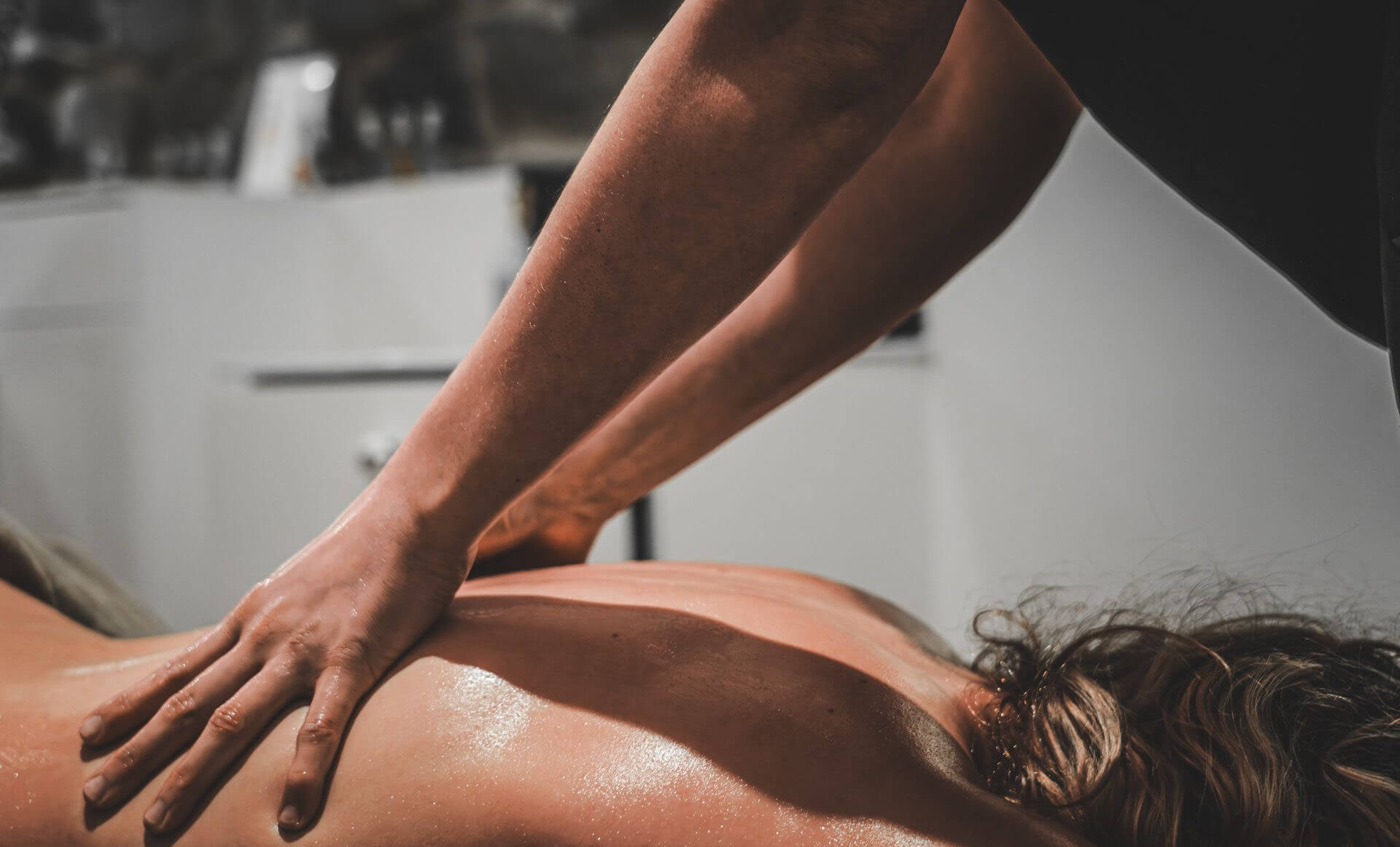
The practitioner grasps the stones two by two and performs long, deep glides from the sacrum to the shoulders, then down the arms and legs.
The stones replace the palms: the heat amplifies the effect of the movement and allows you to go down into the deep muscle layers without excessive pressure.
Step 5: Finishing touches and returning to calm (5-10 min)
The last stones are removed and a gentle massage with bare hands concludes the session. A warm towel placed on the shoulders accompanies the return to consciousness.
You remain lying down for a few minutes, in the dim light , taking the time to savor the cocoon effect before returning to our transition space.
Variations: cool stones, warm-cold hybrid, and Mont Anis signature
The cold stone protocol
Cold marble stones — around 10 to 15 °C — are indicated for heavy legs, vascular headaches and feelings of excessive heat in summer.
They cause a stimulating vasoconstriction and an immediate tonic effect, unlike hot basalt.
The hot-cold hybrid
The thermal contrast protocol alternates hot and cold stones during the same session. This technique is popular with athletes for muscle recovery.
It acts like a mini targeted cryotherapy session, boosting circulation and accelerating the elimination of lactic acid.
The Mont Anis signature: precious stones + precious oil
Our exclusive version combines basalt stones with a precious aromatic oil — lavender from Provence, immortelle or sandalwood — for a simultaneous olfactory journey.
You can also extend this treatment with a full-body Californian massage during a second visit, to explore another approach to relaxing touch.
Indications, contraindications and precautions
Main indications
Hot stone massage is particularly recommended for chronic muscle tension , accumulated stress, mild sleep disorders and the persistent feeling of cold in winter.
It is also suitable for preparation for athletic performance — hiking in the Sucs, trail running in Mézenc — as well as for recovery.
Absolute contraindications
The treatment is not recommended in case of fever, active skin infection, prominent varicose veins, recent phlebitis, severe heart problem or uncontrolled hypertension .
It is also contraindicated in case of pregnancy — a specific protocol for expectant mothers is then offered on request.
Precautions and adaptations
For sensitive, diabetic skin or skin with thermal sensitivity disorders, we adapt the temperature of the stones — or even the entire protocol towards a bare-hand massage.
If you have very painful back pain , a targeted deep back treatment may be more suitable than a general hot stone protocol.
Frequency, prices and offers in Le Puy-en-Velay
Recommended frequency
For occasional relaxation , a quarterly session is more than enough. To relieve chronic tension, a course of four sessions spaced one week apart provides more lasting results.
As a maintenance treatment, monthly massage maintains optimal muscle balance and prevents relapses.
Seasonality
This treatment is most popular from autumn to spring , when the enveloping warmth is particularly comforting. In summer, we offer the cold stone option or the thermal contrast treatment.
Prices and gift vouchers
The solo hot stone treatment starts at €110 for 60 minutes and tops out at €175 for the signature 90-minute version with precious oil.
All packages are available as a duo massage in a shared cabin and are available as a customizable gift voucher, valid for one year.
Summary table of hot stone formulas
Formula | Duration | Main objective | Price |
Hot stones discovery | 60 min | Initiation, overall resolution | €110 |
Full hot stones | 90 min | Back, legs, arms, neck | €145 |
Signature Mont Anis precious oil | 90 min | Stones + lavender, immortelle or sandalwood | €175 |
Warm-cold contrast | 75 min | Sports recovery, heavy legs | €135 |
Hot stone duo in a shared cabin | 2 x 75 min | Whether as a couple or partners, a ritual for two | €260 |
Prices valid in 2026 at Spa Le Mont Anis , Le Puy-en-Velay (43). By reservation only.
Customer review: Hélène's testimonial after her session
"I gave my husband a hot stone massage for his birthday, and we ended up opting for the couples package . The cozy atmosphere of Mont Anis charmed us from the moment we arrived."
"The practitioner took the time to listen to each of us: me, with persistent neck tension; him, with lower back pain from sports, with a striking contrast between the warmth of the basalt and the delicacy of the movements."
"Three days later, I still haven't regained my old tension in my trapezius muscles; we'll be back for the signature precious oil version at the next solstice."
— Hélène, 42 years old, Espaly-Saint-Marcel
Frequently asked questions about hot stone massage
Is the contact with the stones burning hot?
No. The stones are stabilized between 50 and 55 °C , a range tested to diffuse a pleasant and deep heat without risk to the skin, even sensitive skin.
How long do the benefits last?
Immediate relaxation lasts for 24 to 72 hours . Deep muscle improvement is achieved over two to three closely spaced sessions, then continued with a monthly maintenance massage.
Can we follow up with a facial treatment or a sensory experience?
Yes, the hot stone treatment goes particularly well with our private sensory journey for a complete half-day of wellness in the heart of the Haute-Loire.
Is there anything I should avoid before the session?
Avoid heavy meals in the two hours prior to your appointment and stay well hydrated. Arrive with no body makeup and wearing comfortable clothing to facilitate a return to a calm state.
Is this treatment suitable for men?
Absolutely. Men particularly appreciate the depth of muscle work and the enveloping effect of the stones, especially on the back, shoulders and neck areas used by office work or sports.
Are the stones disinfected between each customer?
Yes, systematically . Each pebble is cleaned with clear water and then disinfected between each appointment, in accordance with current French spa hygiene protocols.
Book your hot stone treatment at Spa Le Mont Anis
Do you wish to experience a genuine anti-tension basalt massage in a private setting in the heart of the Haute-Loire? Our practitioner will guide you with attentive listening, expertise and discretion.
The Spa Le Mont Anis welcomes you from Tuesday to Saturday, by reservation only, in Puy-en-Velay (43000).